











V priebehu rokov bolo vykonaných množstvo experimentov, v psychológii, ale aj mimo nej, ktoré sú dnes už považované za neetické. Kedysi sa napríklad psychológ rozhodol experimentovať na svojich vlastných deťoch. Chcel zistiť, či je reakcia na pošteklenie vrodená alebo naučená.
správy od nás budete mať ako prví.
Bizarný experiment na vlastných deťoch
Ako informuje web IFL Science, niektorí odborníci sú schopní zachádzať do extrémov, len aby potvrdili alebo vyvrátili nejakú teóriu. Patrí medzi nich napríklad psychológ Clarence Leuba. Znepokojivý experiment odštartoval v roku 1933. Jeho cieľom bolo zistiť, či je reakcia na pošteklenie u detí vrodená alebo sa ju učíme.
„Konkrétnejšie, snažili sme sa zistiť, či sa smiech objaví ako reakcia na šteklenie, a to ako súčasť procesu dospievania, nezávisle od akejkoľvek súvislosti s inými podnetmi vyvolávajúcimi smiech,“ napísal Leuba vo svojej štúdii.
To znamená, že zisťoval, či dieťa naozaj rozosmieva šteklenie alebo iné aspekty, napríklad to, ak sa rodič na dieťa usmieva. Pochopiteľne, na to potreboval subjekt, ktorý mohol experimentu vystavovať dlhodobo. Leuba mal s manželkou päť detí a jeho pokusnými subjektmi sa stali štvrté a piate dieťa – dcéra a syn.
The Psychologist And His Wife Who Subjected Their Children To A Bizarre Masked Tickling Experiment | James Felton, IFLScience
There are scientists who have gone to extreme lengths to prove things or test out lifesaving ideas. The first example that springs to mind is the doctor who saved thousands of lives by pumping hydrogen gas into his own anus.
Then there are scientists who went to extreme lengths to answer lesser questions, and I think I like them most of all.
An obvious example of this is Dr Donald Unger, who began an enjoyable but not all-that-important 50-year experiment in 1948.
In an attempt to figure out if knuckle-cracking led to arthritis, for half a century Unger committed to cracking all the knuckles on his left hand, but not the knuckles on his right hand. After cracking his knuckles an impressive 36,500 times, he had his results. But even then he didn’t place much stock in them, given the sample size of one.
“Knuckle cracking did not lead to arthritis after a 50-year controlled study by the one participant,” he wrote in his study. “While a larger group would be necessary to confirm this result, this preliminary investigation suggests a lack of correlation between knuckle cracking and the development of arthritis of the fingers.”
The masked tickler
Then there is the psychologist Clarence Leuba.
Ever the scientist, Leuba went to extreme lengths to figure out if the human response of laughing when tickled was an innate or learned response, beginning his slightly terrifying experiments in 1933.
“More specifically,” Leuba wrote in a resulting paper, “we sought to discover whether or not laughter would appear in response to tickling, as an aspect of the maturational process independently of any association with other laughter provoking stimuli.”
Basically, he wanted to test whether or not laughing in response to tickling spontaneously occurred in children, or whether it was linked to other associated aspects such as the parent smiling and laughing themselves.
Naturally, to study this kind of question you’re going to need some form of tickling device, and long-term access to infants for study.
Fortunately for Leuba, both were available to him in the form of a tickling tassel and his fourth and fifth children.
The idea was to tickle the infants over the first year of their life, without any of the usual social cues that might indicate this is an amusing thing the babies would enjoy.
To achieve this, Leuba and his wife came up with some rather curious ground rules.
For a start, the children would only be tickled during these experimental sessions. The couple also vowed never to tickle their children when another person nearby could be seen laughing, or else when the child was already laughing due to another game, for instance peek-a-boo.
Already, that’s probably a pretty odd experience for a child who would suddenly get a tickle attack from their parents but only at certain times and under strict conditions.
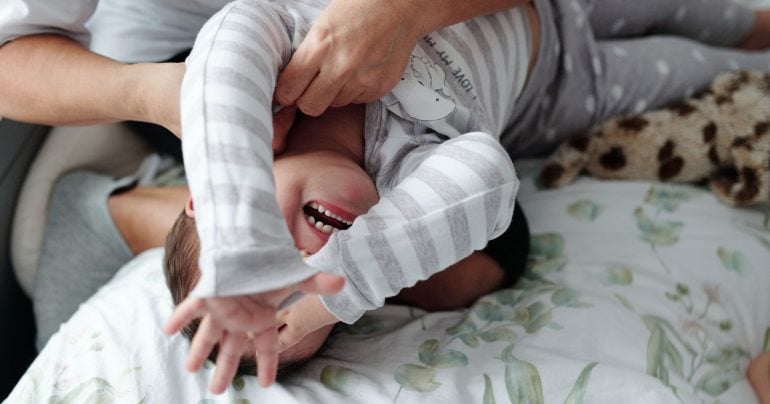
The experimenters would hit all the main tickle zones (armpits, backs of knees, neck) and do so softly at first, and then more vigorously while observing the children and their response.
This was all performed, of course, whilst wearing a special tickling mask.
“Before approaching the infant, the experimenter always concealed his face behind a 12″ by 15″ piece of cardboard, having a narrow slit in front of each eye through which the infant could be observed,” Leuba explained.
“While tickling, the experimenter always sought to keep a smiIeless, sober expression, even though his face was hidden behind the cardboard shield.”
Innate or learned?
At first, both the male and female babies didn’t show much of a response to the tickling, other than a little squirming.
They both naturally developed a laughing response to other stimuli, such as faces getting suddenly closer, which as we all know is hilarious to a baby. But a laugh in response to tickling didn’t begin until the babies were between 6 and 7 months old.
Incredibly, despite the unusual tickling masks the infants did appear to enjoy their assigned tickle sessions.
They would often try to grasp at the experimenters’ fingers to stop the tickles, but the boy would then try to pull the fingers back and request “more tickling”, once he had the vocabulary for it.
“On the other hand, sustained vigorous tickling, especially along the ribs and in the arm pits, seemed to be overly exciting for the children,” Leuba wrote. “It caused violent bodily movements and eventually crying. Both babies seemed to enjoy mild, intermittent tickling and to dread sustained tickling.”
“They used their hands as best they could to control the experimenter’s fingers to produce a maximum of the former and a minimum of the latter.”
Once the children realized that tickling was quite funny, they began to associate raised fingers with the activity, and began giggling at the sight of raised fingers.
This was sort of like an inverse of the infamous Little Albert experiment, in which a baby was conditioned into being terrified of anything fluffy, including rabbits, dogs, fur coats, cotton wool, and a Santa Claus mask (there’s always a mask).
But the headline finding was that the laughter response to tickling appeared to be innate, and not learned.
There is a social element to it, of course, with Charles Darwin noting “in that of laughter from being tickled the mind must be in a pleasurable condition; a young child, if tickled by a strange man, would scream in fear,” but clearly there was also something more deep-seated going on.
The evolutionary origin of tickling
Scientists are still unclear on the exact benefit of the tickle response.
In the case of light tickling, known as knismesis, there is evidence it may help you detect creepy crawlies that have made their way onto your skin. In heavier tickling, or gargalesis, there are a few other ideas, with some suggesting that it helps with social bonding and developing a sense of humor.
In the opposite direction, others have suggested it may be a form of early-life combat training.
“One plausible theory suggests that tickle may be an evolutionary adaptation, evident as it is in the social interaction among primates,” one paper explains. “Thus, the discomfort and pleasure elicited by tickling might be adaptive and help a child develop skills that can be used in defense and combat.”
Tickling will surely be studied more, and hopefully we will get to the bottom of it. But thanks to one couple, a mask, and a large dose of not worrying about the effects of masked tickling on your kids, we had early evidence that tickling is an innate response in infants.
https://t.co/okqECKlpAK
— Owen Gregorian (@OwenGregorian) November 18, 2026
Rozhodol sa, že deti bude štekliť počas prvého roka ich života, avšak bez toho, aby sa na nich usmieval. Nechcel im dať úsmevom či iným prejavom najavo, že ide o aktivitu, ktorá by pre deti mala byť zábavná.
Zvláštne pravidlá
Aby svoj cieľ dosiahol, Leuba vytvoril sériu pravidiel. Napríklad, deti smeli byť šteklené len v rámci experimentu, ale nikdy nie mimo neho. Nesmelo sa štekliť dieťa, ktoré sa už smialo z iného dôvodu, napríklad pri hre, a počas šteklenia nesmel byť prítomný nikto iný, kto sa práve smial alebo usmieval sa. Deti museli byť pošteklené na všetkých miestach, kde sú ľudia bežne štekliví najviac, napríklad chodidlá či podpazušie.
Šteklenie bolo spočiatku len jemné, no jeho intenzita sa stupňovala. Počas šteklenia nosil Leuba špeciálnu masku vyrobenú z kartónu, ktorá zakryla akýkoľvek výraz jeho tváre. Na kartóne boli len výrezy na oči, aby psychológ mohol výsledky svojho experimentu pozorovať. Psychológ sa však musel tváriť vážne dokonca aj za maskou, povolený nebol žiaden prejav radosti.
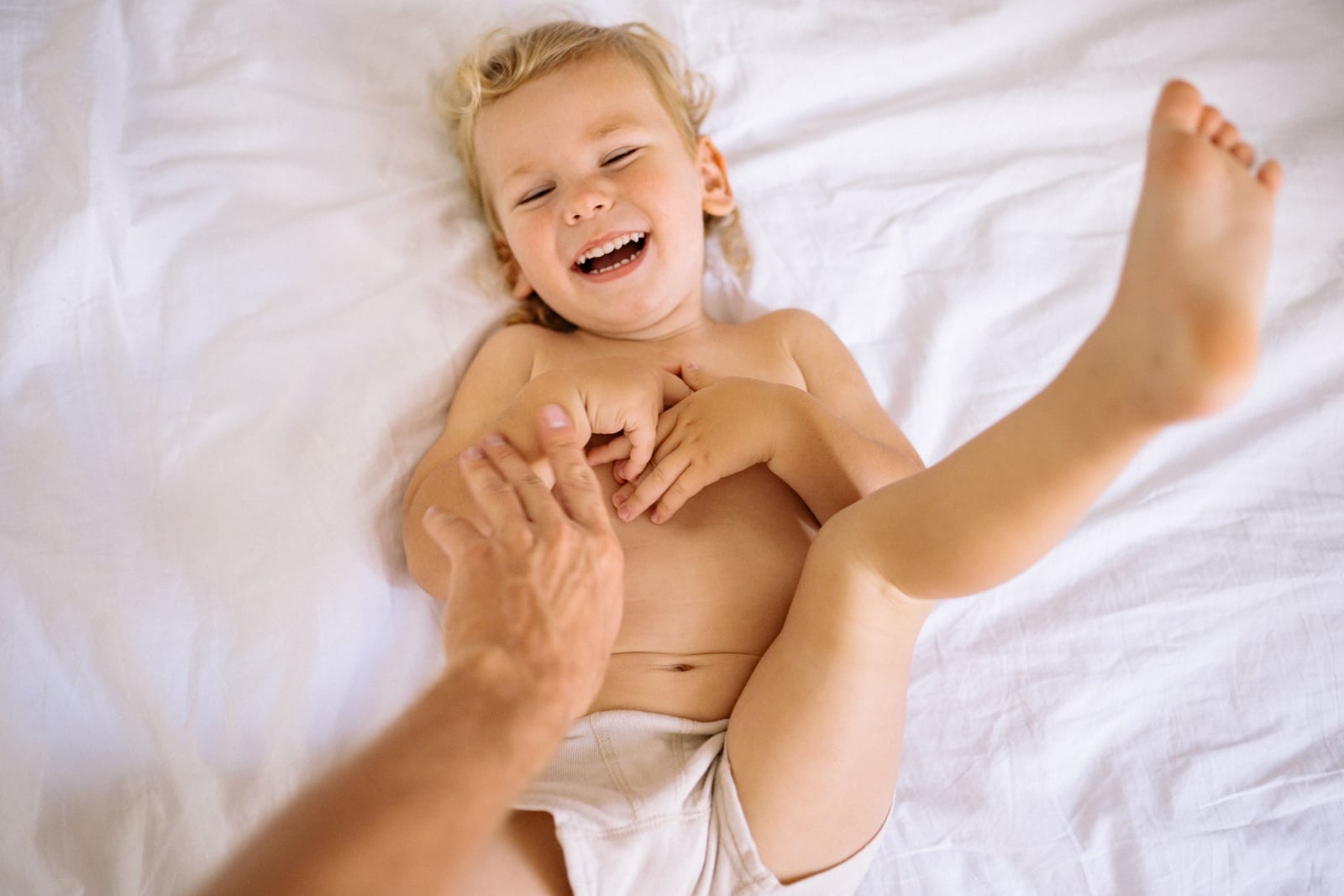
Spočiatku ani dcéra, ani syn neprejavovali výrazné reakcie na šteklenie okrem toho, že sa trochu pomrvili. Obe deti sa však smiali pri iných stimuloch, ktoré batoľatá bežne dokážu rozosmiať. Šteklenie ich však začalo rozosmievať, až keď mali 6 až 7 mesiacov.
Aký bol výsledok?
Psychológa prekvapilo, že deti sa pri šteklení smiali napriek tomu, že mal na tvári masku a nijak deťom nedal najavo, že je to niečo smiešne. Občas sa snažili odtlačiť ruku, ktorá ich šteklila. Inokedy si ale deti žiadali šteklenia viac a ruku, naopak, pritiahli späť, ak Leuba so šteklením prestal.
Leuba napokon zhodnotil, že obe deti sa tešili z mierneho šteklenia. Ak však bolo príliš intenzívne, napokon sa rozplakali. Pokiaľ išlo o jemné šteklenie, deti si časom uvedomili, že sa spája so zdvíhaním prstov a tešili sa už vtedy, keď videli, že sa k nim rodič blíži a dvíha ruky.
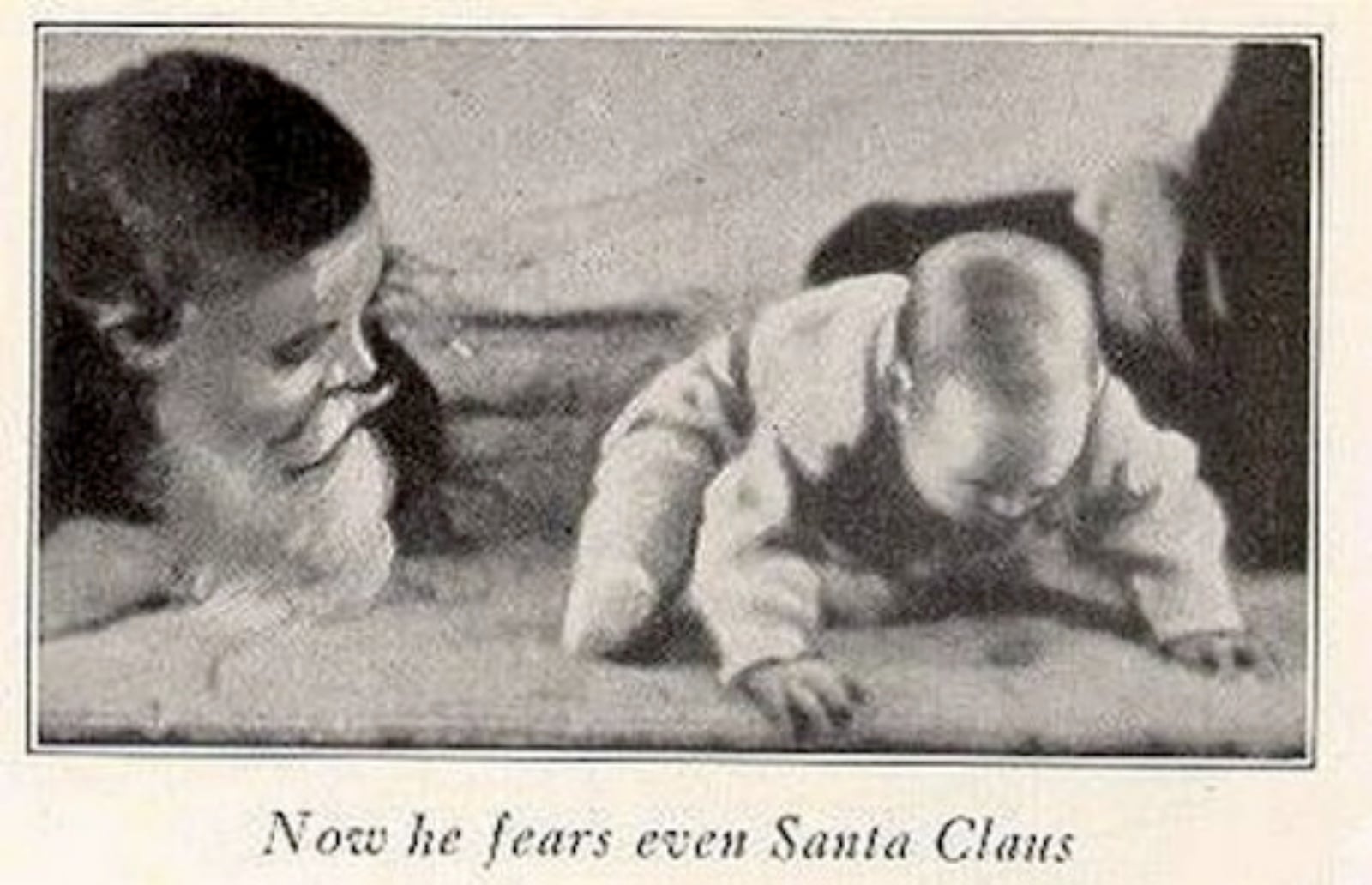
Hoci aj tento experiment znie bizarne, do histórie sa zapísali aj také, ktoré deti traumatizovali doživotne. Napríklad experiment s malým Albertom, ktorého vedci zámerne naučili báť sa. Vyvolali v ňom hrôzu zo všetkého, čo bolo huňaté, vrátane králikov, psov, masky Santa Clausa či dokonca aj obyčajného chumáča vaty.













Nahlásiť chybu v článku